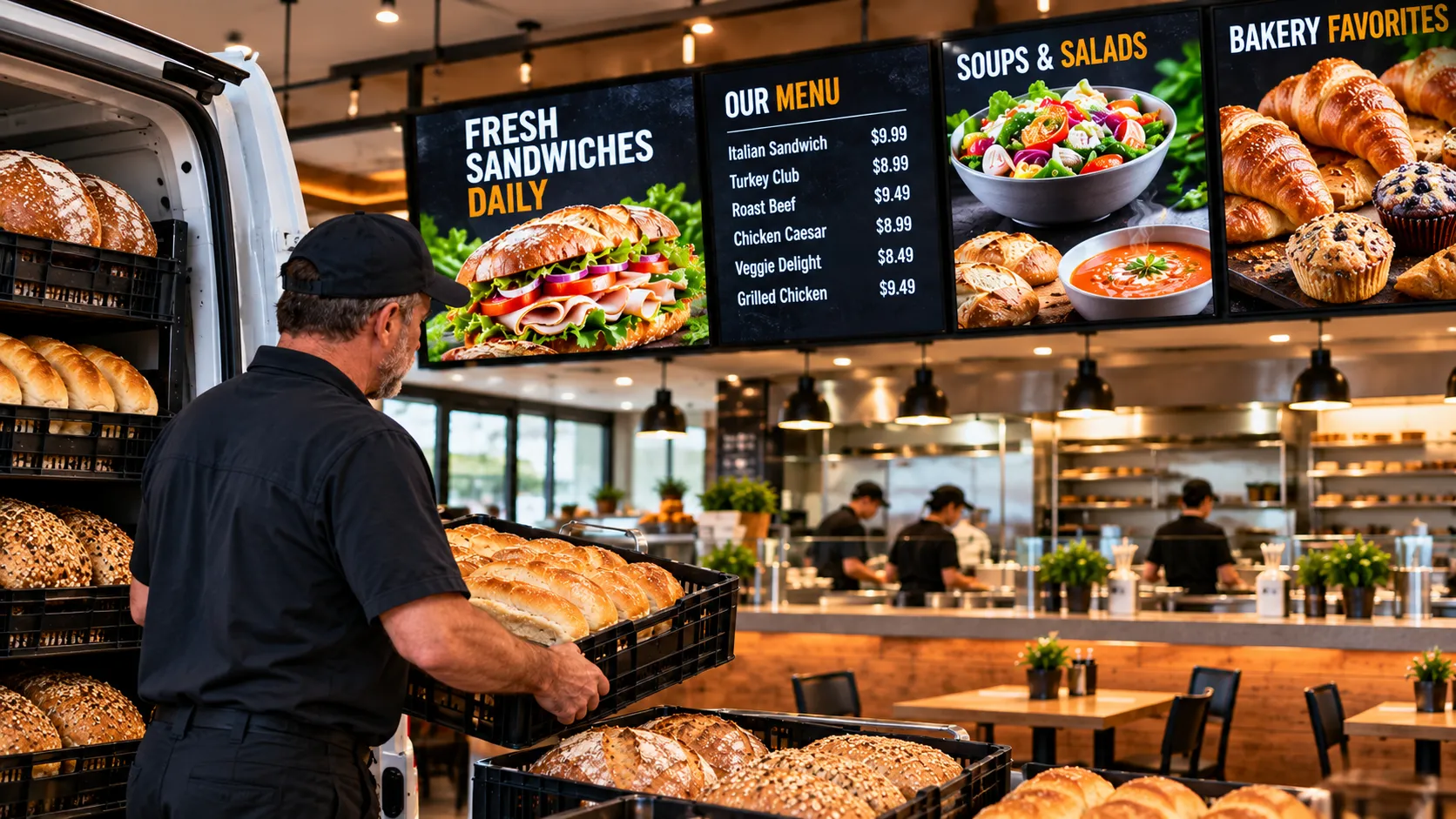
Delivering fresh bread to restaurants, delis, cafés, and sandwich shops offers an interesting perspective on how food businesses operate. Walk into enough establishments, and you begin noticing the little details that separate an organized restaurant from one struggling to keep up. One thing that immediately catches the eye is the growing number of large television screens displaying beautiful food photography, colorful specials, and easy-to-read prices. These digital menu boards for restaurants are becoming a familiar sight in food establishments, but they’re just one example of how restaurant owners are improving their businesses.
Beyond the screens and modern technology, there are many things worth observing about how restaurants handle deliveries, manage inventory, prepare food, and serve customers.
For anyone involved in wholesale bread distribution, restaurant supply, or food service, these everyday details provide valuable insights into what makes a restaurant run efficiently.
1. The Importance of Reliable Bread Deliveries
Bread is a fundamental ingredient for countless restaurants.
Delis depend on fresh rolls and heroes for sandwiches. Burger restaurants need consistent buns. Italian restaurants serve bread alongside meals, while cafés rely on croissants, bagels, and other baked goods.
When a bread delivery arrives late or an order is incomplete, the problem can affect the entire day’s operations.
Imagine a busy sandwich shop preparing for its lunch rush only to discover that its regular bread delivery hasn’t arrived.
Even if the kitchen has every other ingredient ready, certain menu items may become unavailable.
This is why dependable supplier relationships are so important.
Restaurants benefit from working with bread suppliers who understand their ordering patterns, delivery schedules, and product requirements.
Reliability often matters just as much as price.
2. Restaurants That Stay Organized Handle Deliveries Better
One noticeable difference between food establishments is how they receive incoming deliveries.
Some restaurants have designated receiving areas, clear storage procedures, and employees responsible for checking orders.
Others handle deliveries in the middle of crowded kitchens, busy counters, or customer walkways.
An organized receiving process helps reduce mistakes and confusion.
For example, employees should know how to verify quantities, inspect packaging, and identify damaged products before accepting a delivery.
Bread should be stored according to the supplier’s recommendations, with attention to freshness, cleanliness, and proper stock rotation.
Even simple improvements in receiving procedures can make daily restaurant operations more manageable.
3. Freshness Is Part of the Customer Experience
Customers may never meet the bakery supplying their favorite restaurant, but they experience the quality of its products.
A sandwich made with fresh bread can leave a very different impression from one prepared with a stale roll.
For restaurants specializing in sandwiches, burgers, breakfast items, or baked goods, bread quality is especially important.
Freshness affects texture, appearance, and overall satisfaction.
Restaurant owners should consider how quickly their bread is used, how much they order, and whether their storage methods preserve quality.
Ordering too much can increase waste, while ordering too little can result in shortages during busy periods.
Finding the right balance requires communication between the restaurant and its supplier.
4. Successful Restaurants Pay Attention to Presentation
Another interesting observation is how much presentation matters.
Two restaurants can sell similar sandwiches at comparable prices, yet the customer experience may feel completely different.
One business might have poorly organized menus, cluttered counters, and limited product information.
Another might feature bright lighting, attractive food photography, organized displays, and clearly presented specials.
Customers often begin forming impressions before placing an order.
The appearance of the restaurant, cleanliness of the counter, and visibility of the menu all contribute to that experience.
This is particularly important for businesses selling fresh bread, pastries, and prepared foods.
A bakery displaying attractive photographs of freshly baked products may encourage customers to explore options beyond their usual purchases.
Presentation doesn’t replace product quality, but it can help communicate that quality.
5. Understanding the Morning Rush
For bakeries, delis, and breakfast cafés, the morning hours can be among the most demanding parts of the day.
Customers want coffee, breakfast sandwiches, bagels, and pastries quickly.
At the same time, employees may be receiving deliveries, preparing ingredients, and organizing inventory.
Restaurants that handle these overlapping responsibilities effectively usually have established routines.
Bread deliveries may be scheduled before peak customer traffic, allowing staff to prepare products in advance.
Employees may also organize popular ingredients near preparation stations to reduce unnecessary movement.
A well-planned morning routine helps businesses manage customer demand without sacrificing service quality.
For suppliers, understanding a restaurant’s busiest hours can also make deliveries more efficient.
6. Menu Variety Can Create Inventory Challenges
Restaurants often want to offer customers a wide selection of products.
A deli might sell dozens of sandwiches, multiple bread options, wraps, burgers, salads, and breakfast combinations.
While variety can attract different customers, it also makes inventory management more complicated.
Every additional bread type or specialty ingredient introduces another product that must be ordered, stored, and monitored.
For example, a restaurant offering white rolls, whole wheat rolls, heroes, brioche buns, and specialty breads needs to understand how quickly each product sells.
If certain products move slowly, they may create unnecessary waste.
Restaurants can improve inventory decisions by reviewing sales patterns and adjusting orders based on actual demand.
Suppliers can also provide valuable guidance about package quantities, product availability, and ordering frequency.
7. Communication Between Restaurants and Suppliers Matters
Strong supplier relationships depend on communication.
Restaurant owners should inform suppliers when they expect unusual demand, plan to introduce new menu items, or need to adjust delivery quantities.
Consider a sandwich shop preparing a large catering order for an upcoming weekend.
If the supplier knows about the event in advance, there may be more time to arrange additional bread.
Without communication, the restaurant risks discovering a shortage at the worst possible moment.
The same principle applies when restaurants change their menus.
A business introducing a new sandwich on a specialty roll should confirm that the required bread can be supplied consistently.
Planning ahead helps both sides avoid last-minute problems.
8. Reducing Food Waste Protects Profit Margins
Food waste is an ongoing concern for restaurants and bakeries.
Bread is particularly vulnerable because freshness is an important part of its appeal.
Ordering excessive quantities can lead to unsold products, while poor storage conditions may shorten usable shelf life.
Restaurants can reduce avoidable waste by maintaining accurate inventory records and reviewing purchasing patterns.
A useful approach is to track how much bread is received, how much is used, and how much remains at the end of the day.
Over time, these records can reveal differences between weekdays, weekends, holidays, and seasonal periods.
Restaurants may also find that certain products sell more frequently during breakfast or lunch.
These insights can help owners make more informed purchasing decisions.
Reducing waste isn’t only about lowering expenses. It can also help restaurants maintain fresher inventory for their customers.
9. Technology Is Changing Everyday Restaurant Operations
Restaurant technology extends far beyond digital menus.
Many food businesses now use electronic ordering systems, inventory software, delivery platforms, and digital payment solutions.
These tools can help organize information and reduce certain repetitive administrative tasks.
For example, an electronic inventory system may help managers identify products that need to be reordered.
A digital scheduling system can help organize employee shifts.
Customer-facing screens can display promotions and menu information without requiring new printed materials whenever something changes.
However, technology should solve practical problems rather than introduce unnecessary complexity.
A small sandwich shop may not need the same systems as a restaurant chain operating dozens of locations.
Owners should evaluate technology based on their specific operations, staff capabilities, and budgets.
10. The Best Restaurants Build Strong Local Relationships
Restaurants are part of a larger network of local businesses.
Behind every sandwich shop, café, or bakery are suppliers providing bread, produce, beverages, packaging, cleaning products, and equipment.
These relationships help keep restaurants operating.
A dependable bread supplier can become an important partner by providing consistent products and understanding a restaurant’s needs.
Likewise, restaurant owners who communicate clearly and pay attention to ordering patterns make it easier for suppliers to serve them effectively.
Local business relationships can also create opportunities for referrals and collaboration.
A bakery may introduce a restaurant to a reliable delivery partner, while a restaurant might recommend a supplier to another business owner.
These connections can strengthen the wider food-service community.
11. Small Operational Improvements Add Up
Not every restaurant improvement requires a major renovation or expensive equipment.
Sometimes the most useful changes are relatively simple.
Reorganizing a storage area can make deliveries easier to receive.
Improving inventory records can help reduce unnecessary purchases.
Updating menu presentation can make ordering information clearer for customers.
Adjusting delivery schedules can help employees focus on food preparation during peak hours.
Each improvement addresses a different part of the business, but together they can create a more organized operation.
Restaurant owners should regularly review their daily routines and identify tasks that cause unnecessary delays or confusion.
Often, the people working closest to those processes have the best suggestions for improving them.
Final Thoughts
Looking at restaurants through the perspective of bread delivery and food supply reveals how many moving parts are involved in running a successful establishment.
Fresh ingredients, dependable suppliers, organized inventory, attractive presentation, and efficient daily routines all contribute to the customer experience.
Technology is becoming another important part of that environment, but the fundamentals of restaurant operations remain the same.
Customers expect fresh food, accurate orders, reasonable waiting times, and consistent quality.
For restaurant owners, long-term success often comes from improving many small details rather than relying on one major change.
Whether it’s choosing a dependable bread supplier, improving delivery procedures, or modernizing how menu information is displayed, thoughtful operational decisions can make a meaningful difference.